Das Kabinenbild ist lediglich ein Beispiel.
Abweichungen sind möglich.
Das Kabinenbild ist lediglich ein Beispiel.
Abweichungen sind möglich.
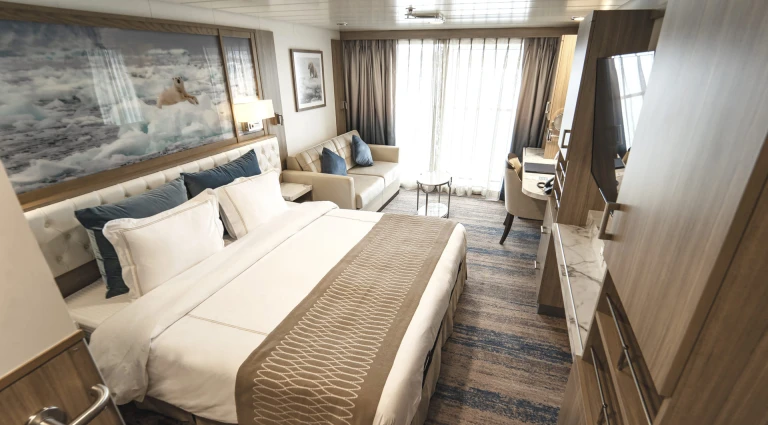 Das Kabinenbild ist lediglich ein Beispiel.
Abweichungen sind möglich.
Das Kabinenbild ist lediglich ein Beispiel.
Abweichungen sind möglich.
 Das Kabinenbild ist lediglich ein Beispiel.
Abweichungen sind möglich.
Das Kabinenbild ist lediglich ein Beispiel.
Abweichungen sind möglich.
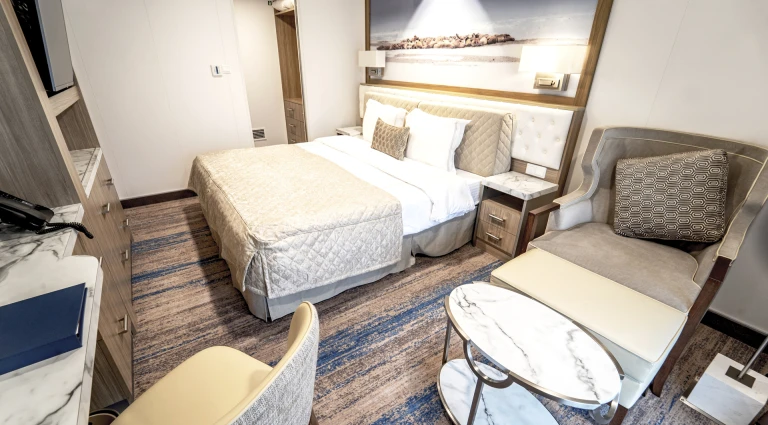 Das Kabinenbild ist lediglich ein Beispiel.
Abweichungen sind möglich.
Das Kabinenbild ist lediglich ein Beispiel.
Abweichungen sind möglich.
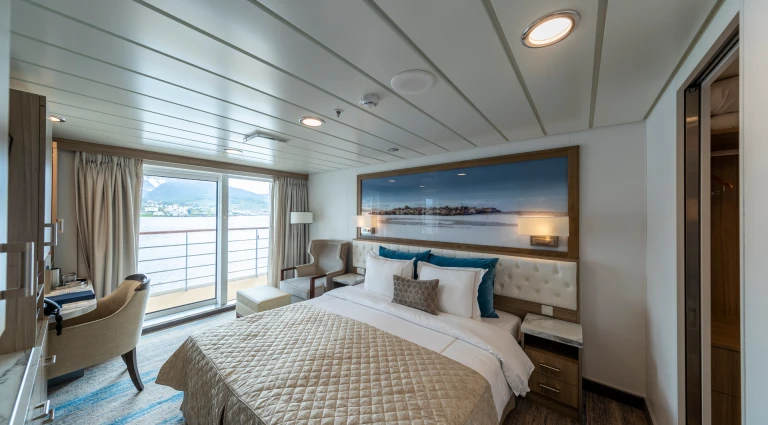 Das Kabinenbild ist lediglich ein Beispiel.
Abweichungen sind möglich.
Das Kabinenbild ist lediglich ein Beispiel.
Abweichungen sind möglich.
Erfahren Sie es zuerst!
Abonnieren Sie unseren Newsletter:
Wählen Sie jetzt noch eine passende Kabine und entdecken Sie polare Welten! Alle Informationen zu dieser Reise mit dem Reisecode SCO022G können Sie ausdrucken oder speichern.
Reisetermin
07.05. - 19.05.2027 (13 Tage)Reederei
Aurora ExpeditionsSchiff
Greg Mortimer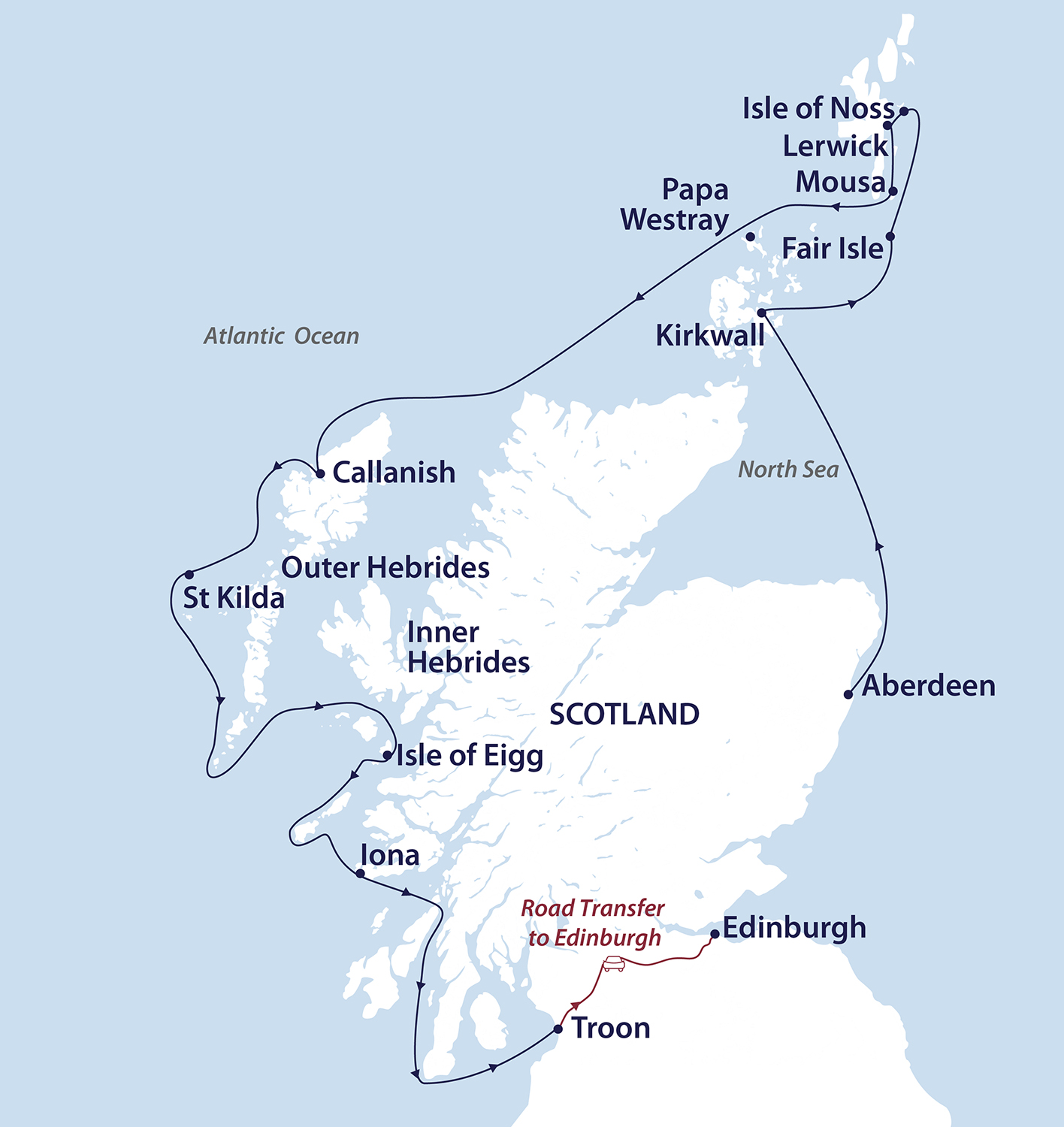
Reiseverlauf abhängig von Wetter- und Eislage. Beschriebene Naturerlebnisse/Tiersichtungen sind mögliche Ereignisse auf den Expeditionen und nicht garantiert.
Having made your way to Aberdeen airport, you will be met by a representative of Aurora Expeditions and transferred to our group hotel. Upon arrival at your included hotel, please visit the Aurora Expeditions hospitality desk to collect your luggage cabin tags and to speak with our ground operations team, who may have information to share with you about pre-embarkation or to provide you with information about where to dine, withdraw cash or purchase last minute items from a local pharmacy or supermarket. The remainder of your time is at leisure. All meals today are at your own expense. Accommodation: Sandman Signature Aberdeen Hotel (or similar).
After breakfast, check-out and bring your luggage to the foyer. Please place any items required today in your hand luggage as your main bag will be placed in the bays of the coach. After breakfast, check-out and bring your luggage to the foyer. Today we explore ‘The Granite City’ visiting some of Aberdeen’s most famous landmarks including the magnificent Kings College Chapel which is a fantastic example of gothic architecture and the St Machar Cathedral a 12th century church with its beautiful stained-glass windows. Depart for Glen Garioch Distillery, a 200-year-old distillery situated in the sheltered heart of the Valley of the Garioch, blessed as it is with the north east’s mild climate, plentiful sunshine and not too much rain, the Valley has long been renowned as the finest barley growing area in the country. Once home to no fewer than six distilleries, today the Valley cradles just one - this established distillery has changed hands several times and the current owners have had the distillery in their family since 1886. You will be taken on a tour of this award-winning distillery where you will see their time-honoured skills at work and see what goes into making this unique spirit. Complete your distillery journey with a taste of two whiskies from their core range and for those who wish, there will be an opportunity to visit their onsite shop. Afterwards enjoy a scenic drive to the Huntly Falconry Centre. This centre was established in 1991 and is one of the first falconry centres in Scotland. Huntly Falconry Centre hold birds of prey falconry demonstrations throughout the season, where owls, hawks, falcons, and eagles can be seen flying every day. Marvel at the full range of bird skills during the flying demonstration before our drive returns us to Aberdeen to board the Greg Mortimer in the late afternoon. You will have time to settle into your cabin before our important briefings. We will set sail for Fair Isle in the evening and meet your expedition team and crew at the Welcome Dinner.
Discover the rich history in Kirkwall, capital of the Orkney Islands. Initial impressions are misleading, as the harbour area looks modern, but the narrow winding streets and lanes of the old town, which have remained relatively unchanged over the centuries are appealing. Everything west of Kirkwall is known as West Mainland, an area of rich farmland, rolling hills and moorland, with dramatic cliffs along the Atlantic coastline. Some of the main archaeological attractions we may see include the standing Stones of Stenness, the Ring of Brodgar, and the chambered tombs of Maes Howes that to this day still have unresolved mysteries. Personalise your expedition with our included ‘Your Choice’ experiences that best suits your interests and level of fitness. Option 1: Orkney Treasures - Skara Brae. Embark on a journey through the serene countryside, venturing into the World Heritage heartland of the Orkney’s, celebrated for its abundance of prehistoric archaeology. Traverse past the awe-inspiring Standing Stones of Stenness and make a pause at the Ring of Brodgar—an immense ceremonial stone circle with roots reaching back nearly 5000 years. Continue your exploration to the ancient village of Skara Brae, a settlement that has withstood the test of time for 5000 years. Delve into its rich history, thoughtfully interpreted at the visitor centre, and witness the remarkable dwellings unveiled from beneath the sand dunes by storms a mere 150 years ago. A short 200-meter stroll leads to Skaill House, a distinguished manor and Orkney's finest. Constructed in 1620 by Bishop George Graham on the grounds of a farmstead believed to date back to the Norse period, Skaill House boasts a 400-year legacy. All 12 of its Lairds throughout history are interconnected, each contributing to the house's storied history and impressive collection. Immerse yourself in the captivating tales and artifacts within the walls of this historic manor, a testament to the enduring heritage of Orkney. Option 2: The Heart of Neolithic Orkney. Pass through the gentle rolling landscape and into the Neolithic Heartland of Orkney; an area designated as a World Heritage Site due to its wealth of pre-historic archaeology. Stop at the Ring of Brodgar; a huge ceremonial circle of stones dating back almost 5000 years. Next take a short coach journey to marvel at the smaller, yet taller and more ancient Standing Stones of Stenness, currently the oldest known stone circle in Europe. Ponder upon its creation and hear of folk tales and traditions inspired by its mysterious and elusive magnificence. Wander along to Barnhouse, an ancient Neolithic village and part of Orkney’s UNESCO World Heritage Site. Walk among the houses and learn about everyday lives of the Neolithic people who built these structures. Pause to appreciate the serene bird hide nestled along Harray Loch, offering a tranquil interlude in nature. Conclude your day with a visit to St Magnus Cathedral, a testament to the Vikings' architectural prowess during their 500-year reign over the islands. This unique tour promises a fresh perspective, unveiling the lesser-explored facets of Orkney's Neolithic legacy and inviting you to connect with its mysterious and enduring history.
Britain’s most northerly islands lie almost 160 kilometres (99 miles) north of the Scottish mainland, at a similar latitude to the southern tip of Greenland, or Bergen in Norway. Kept relatively warm by the Gulf Stream, Shetland’s 100 islands experience almost 24 hours of daylight in summer. They abound with nature reserves and archaeological sites and offer a taste of traditional island life. We plan to explore some of the following sites. Midway between Orkney and Shetland, Fair Isle houses a major European ornithological research station and is also famous for knitwear and historic shipwrecks. About five kilometres by three kilometres / three miles by two miles in area, it is surrounded by impressive cliffs. The 70 or so islanders mainly live in traditional crofts on the more fertile low-lying southern part of the island. A bird watchers’ paradise, Fair Isle lies on the intersection of major flight paths from Scandinavia, Iceland and Faroe. In summer, the cliffs teem with breeding fulmars, kittiwakes, guillemots, gannets, shags and puffins. The Isle is an excellent place to view seabirds, especially puffins at close range. Fair Isle also has over 250 species of flowering plants, including wetland flowers, rare orchids, alpine species and common wildflowers. We’ll be welcomed by the hospitable villagers and may take a hike or visit the museum. Grey and common seals inhabit these waters around Fair Isle, while sharp eyes may spot harbour porpoises, white-beaked dolphins, Atlantic white-sided dolphins, killer whales (orcas) and minke whales. From Lerwick, explore Jarlshof, one of Shetland's best preserved and most complex archaeological sites. It was exposed by storms in the late 19th century. The Old House of Sumburgh, built here in the 17th century, was named 'Jarlshof' by Sir Walter Scott in his novel 'The Pirate'. The record of human occupation dates from around 3,200 BCE. Jarlshof’s main Bronze Age site is the house of a bronzesmith working around 800 BC. Clay moulds into which molten bronze was poured revealed that he was casting axe heads and short swords. It seems that Shetland suited early Norse settlers, for they quickly settled here and left their mark on Shetland's history for ages to come. With its mile-long seabird cliffs, the Island of Noss is a National Nature Reserve. In breeding season, the sound of around 150,000 birds and chicks fills the air. Millions of years of wind and ice have honeycombed thousands of nesting ledges in sandstone cliffs almost 200-metres / 656-feet high. Resident seals and visiting otters feed in dense kelp around the shores. Mousa Broch, on the small uninhabited island of Mousa, is the best preserved of Scotland’s 570 brochs (fortified Iron Age towers). Storm petrels nest among its stones, which can be seen when visiting the broch at night. In daylight, a large colony of common and grey seals basks on its shores, and you may spot otter (Dratsi, in Shetland dialect).
Orkney’s archipelago of 70 windswept islands, 10 kilometres / 6 miles north of the Scottish mainland, a rich tapestry of archaeology, history and wildlife awaits. We follow the passage of time—from 5,000-year-old World Heritage Neolithic sites, past relics from Vikings and reminders of World War II occupation—to present day crofting communities. Imposing sea cliffs teem with seabirds and cliff top paths beckon the keen hikers among us. Our kayakers use paddle-power to explore sections of Orkney’s fascinating coastline. At the Knap of Howar on Papa Westray lies the earliest known house in Northern Europe, occupied by Neolithic farmers over 5,000 years ago. Here we are welcomed by the friendly locals. Enjoy the lively Scottish dance and folk ensemble, "Poor Man's Corner," hailing from Papa Westray, set to grace the local pub with their spirited tunes. Mingle and enjoy a few drinks, while listening to the captivating melodies and infectious rhythms. From the Orkneys we make our way to the Outer Hebrides – also known as the Western Isles – that stretch for 209 kilometres (128 miles) and look out on their western side to the Atlantic Ocean. Our first stop is at the Isle of Lewis, the largest and northern-most island in the Outer Hebrides. We plan to make a stop at Callanais, where archaeology buffs will be keen to see the fascinating group of Standing Stones, dating from around 3,000 BCE. Weather permitting, we plan to land at the isolated archipelago (and World Heritage site) of St Kilda, where derelict crofts bear testament to the fortitude of islanders who once tended the unique Soay sheep and harvested seabirds for food—and to pay their rent in the form of wool, meat and feathers. The isles hold Europe’s most important seabird colony and is home to Britain’s highest sea stacks.
From golden beaches to jagged peaks, bleak moors and heather clad hills; from abandoned settlements to picturesque villages, our days in the Hebrides archipelago will be packed with variety. We may explore remote lochs beneath some of Britain’s most untamed mountains and wander between unusual rock formations. We may watch for whales, dolphins, otters, seals, and the increasingly rare basking sharks. Possibly we will land at an island reserve that is home to red deer and white-tailed sea eagles. We plan to land on remote Isle of Eigg just south of the rugged Isle of Skye for wonderful hikes among stunning wildflowers. The wildlife, history, geology and beautiful scenery make it one of our favourite islands to explore. We hope to make the following landings: The Cuillin Hills have earned a reputation as Britain’s most untamed and challenging mountains. The rocky jagged Black Cuillins attract rock climbers. The smoother conical granite peaks of the Red Cuillins are crowned with heather. We may land at Loch Scavaig in the heart of the Cuillins and take a short hike, perhaps to Loch Coruisk, for spectacular views and get a glimpse of the range’s grandeur. Keener hikers may be able to venture further afield, weather permitting. Meanwhile kayakers may paddle around Loch Scavaig, into Loch Coruisk. They may explore the island of Soay and an abandoned shark fishing station – all against the backdrop of classic views of the Cuillins. On Staffa, we hope to have the chance to explore Fingals Cave, where the melodious sound of waves crashing against towering basalt pillars inspired Mendelssohn's Hebridean Overture. We may enter the cave in Zodiacs, or clamber ashore to walk into the mouth of the cave. On shore we will also find Puffins in abundance. Later in the afternoon we will aim for the tiny island of Iona. Barely 5 kilometres (3 miles) long, Iona is renowned as the birthplace of Christianity in Britain. It is also a burial ground of early Scottish Kings. The Irish monk, St Columba and twelve disciples, landed here and founded a monastery in 563 CE. From this base, St Columba set about converting Scotland and much of Northern England to Christianity.
On arrival in Troon, disembark in the early morning and bid a fond farewell to fellow travellers before a two-hour transfer to Edinburgh airport to continue your journey.*Note: At the conclusion of the voyage, we recommend booking flights departing after 2pm on the day of disembarkation in case there are delays.
All transfers as mentioned in the itinerary.
One night’s hotel accommodation including breakfast, in Aberdeen on Day 1.
Half-day tour in Aberdeen on Day 2.
Onboard accommodation during voyage including daily cabin service.
All meals, snacks, tea, coffee, soft drinks and juices during voyage.
Beer and house wine with dinner.
Captain’s Farewell reception including four-course dinner, house cocktails, house beer and wine, non-alcoholic beverages.
All shore excursions and Zodiac cruises.
Educational lectures and guiding services from expedition team.
Complimentary access to onboard expedition doctor and medical clinic (initial consult).
A 3-in-1 waterproof polar expedition jacket.
Complimentary use of muck boots during the voyage.
Comprehensive pre-departure information.
Port surcharges, permits, and landing fees.
Gratuities during excursions and enrichment program for local guides, drivers, venues and local sites.
Wi-Fi. Please note we travel to remote regions and therefore the connection can be unreliable.
International or domestic flights – unless specified in the itinerary.
Transfers – unless specified in the itinerary.
Airport arrival or departure taxes.
Passport, visa, reciprocity and vaccination fees and charges.
Travel insurance or emergency evacuation charges.
Hotel accommodation and meals – unless specified in the itinerary.
Optional excursions and optional activity surcharges.
All items of a personal nature, including but not limited to, alcoholic beverages (outside of dinner service), on board gratuities*, laundry services, personal clothing, medical expenses, email or phone charges.
*A $15 USD per person per day gratuity for the crew is automatically added to your onboard account. It is at your discretion if you would like to remove the tip (or adjust the amount) when you settle your bill. It is not necessary to tip the expedition team members. This gratuity amount is included for suites as part of their ‘Suite Benefits’.
Ihr Schiff ist die "Greg Mortimer". Ausführlich stellen wir Ihnen dieses Schiff auf unseren Schiffseiten vor. Ausführliche Informationen zu diesem Schiff.
Passagiere
130Bordsprachen

Eisklasse
1A


Haben Sie Fragen zu diesem Reisetermin? Kontaktieren Sie uns gerne telefonisch! Planen Sie mit dem Team von Eisexpeditionen Ihre perfekte Expeditionsreise.
Polare Welten entdecken - mit Eisexpeditionen.de